Wednesday, February 29, 2012

The One and Only Way You Can Tell if a Food is GMO-Free

Story at-a-glance

  • Vermont has recently introduced bill H.722, requiring labeling of foods containing genetically engineered ingredients. Such products would also be prohibited from using advertising or promotional material that states or implies that the food is “natural”. If passed, the bill will take effect in 2014
  • Other US states pushing for mandatory labeling of genetically modified (GM) foods include California, Michigan and Washington
  • Mandatory labeling of GM foods is becoming even more important to counteract laws that prevent anti-GMO efforts. So far, 14 US states have passed laws to protect the unabated expansion of GM seed use. Pending legislation in Michigan now also seeks to prohibit local governments from passing ordinances that impede or prohibit the use of GM seeds of all kinds         Message from Dr. Mercola:

  • A bill has recently been introduced in the Vermont state legislature that would require food to be labeled as genetically engineered if it is entirely or partially produced with genetically engineered ingredients.
    If passed, the bill, H.722, also known as the 'VT Right to Know Genetically Engineered Food Act' i, will take effect in 2014.
    The bill also forbids any such food from using advertising or promotional material that states or implies that the food is:
    • "natural"
    • "naturally made"
    • "naturally grown"
    • "all natural," or
    • Any words of similar meaning
    According to the language of the bill, it would require:
    "... in the case of a raw agricultural commodity, on the package offered for retail sale ... the clear and conspicuous words, 'genetically engineered' on the front of the package ... [or] on a label appearing on the retail store shelf or bin in which such commodity is displayed for sale.
    ... in the case of any processed food, in clear and conspicuous language on the front or back of the package ... the words, 'partially produced with genetic engineering' or 'may be partially produced with genetic engineering'". ii

    More U.S. States Starting to Demand Labeling of GM Foods

    Finally we're starting to see some real opposition against genetically engineered foods in general, and unlabeled GMO's (genetically modified organisms) in particular, in the U.S.! Aside from this Vermont bill, California, Michigan and Washington are also working on ballot initiatives to get mandatory labeling of genetically modified (GM) foods in their states. Vermont takes it a step further though, as the legislation would effectively also end phony "all natural" claims for products that in actuality contain wholly unnatural, GMOs.
    Personally, I believe GM foods must be banned entirely, but labeling is the most efficient way to achieve this. Since 85 percent of the public will refuse to buy foods they know to be genetically modified, this will effectively eliminate them from the market just the way it was done in Europe.
    Sheer ignorance on the part of American consumers has allowed Monsanto and other biotech companies to saturate the market with their genetically altered wares. And misuse of the "all natural" label has only made matters worse. According to a 2010 Hartman Group poll, more than 60 percent of consumers erroneously believe that the "natural" label implies or suggests the absence of GM ingredients, but that is sadly NOT the case... In fact, at the current time, the ONLY label that can protect you against GM ingredients is the USDA 100% Organic label.
    After reading the Cornucopia Institutes' 2011 report Cereal Crimesiii, many, including myself, were shocked to discover some of their favorite natural and even some organic brands were using GM ingredients! For example, natural products that contained 100 percent genetically modified grains included:
    Kashi® Mother's® Nutritious Living® General Mills Kix®
    GoLean® Bumpers® Hi-Lo®

    Two breakfast cereal products that are currently enrolled in the Non-GMO Project, Barbara's Bakery's Puffins and Whole Foods' 365® Corn Flakes, contained more than 50 percent GM corn. Meanwhile, the control, Nature's Path® USDA certified organic corn flakes, contained only trace amounts of GM contamination (less than 0.5 percent). Another sign that American consumers are getting fed up with being stonewalled on the GMO labeling issue is the fact that lawsuits are starting to crop up, accusing food manufacturers of deceptive and misleading practices over their "all natural" claims. Here are just a couple of recent examples:
    • Frito-Lay is being sued by a New York consumer over their 'all natural' snacks that are actually made using GM ingredients, such as Tostitos and SunChipsiv
    • On August 31, 2011, a class action lawsuit was filed against Kellogg/Kashi® for allegedly misleading consumers with its "natural" claims. One Kashi® product in particular, GoLean® Shakes, is composed almost entirely of synthetic and unnaturally processed ingredients, according to the plaintiff

    Why We MUST Insist on Mandatory Labeling of GM Foods

    As I said earlier, mandatory labeling may be the only way to stop the proliferation of GM foods in the U.S. because while GM seeds are banned in several European countries such as Hungary, Germany and Ireland, in the United States, certain states are passing legislation that protects the use of GM seeds and allows for unabated expansion! At present, no less than 14 states have passed such legislation. Michigan's Senate Bill 777v, if passed, would make that 15. The Michigan bill would prevent anti-GMO laws, and would remove "any authority local governments may have to adopt and enforce ordinances that prohibit or regulate the labeling, sale, storage, transportation, distribution, use, or planting of agricultural, vegetable, flower or forest tree seeds."
    While this type of legislation sounds like crazy nonsense to normal people, such bills are essentially bought and paid for through the millions of dollars Monsanto and other biotech companies spend lobbying the U.S. government each year. In the first quarter of 2011 alone, Monsanto spent $1.4 million on lobbying the federal government -- a drop from a year earlier, when they spent $2.5 million during the same quarter.
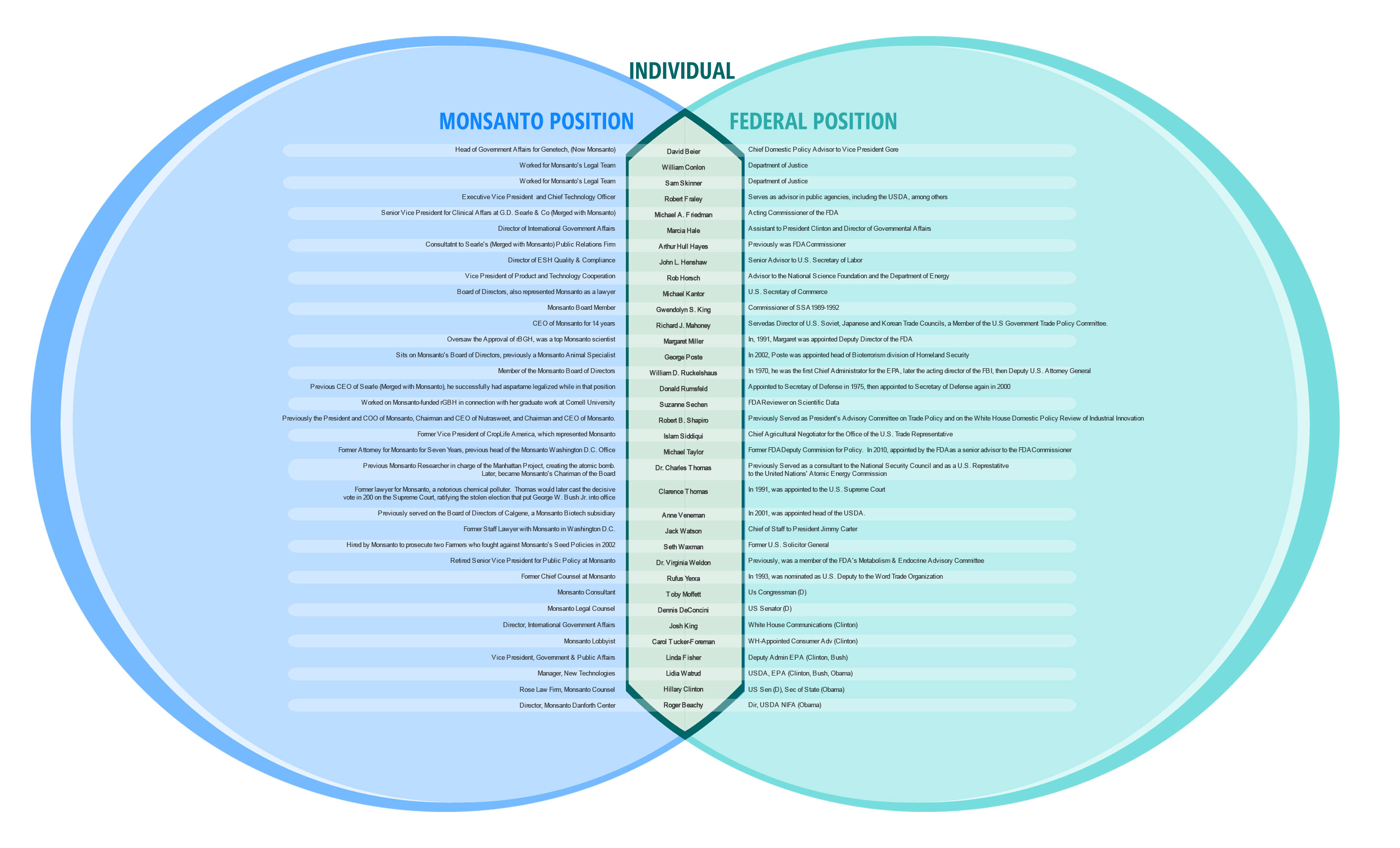
    Their efforts of persuasion are also made infinitely easier by the fact that an ever growing list of former Monsanto employees are now in positions of power within the federal government.

    Learn More about Genetically Modified (GM) Foods

    Due to lack of labeling, many Americans are still unfamiliar with what GM foods are. We have a plan to change that, and I urge you to participate and to continue learning more about GM foods and helping your friends and family do the same.
    To start, please print out and use the Non-GMO Shopping Guide, created by the Institute for Responsible Technology. Share it with your friends and family, and post it to your social networks. You can also download a free iPhone application, available in the iTunes store. You can find it by searching for ShopNoGMO in the applications.
    Your BEST strategy, however, is to simply buy USDA 100% Organic products whenever possible, (as these do not permit GM ingredients) or buy whole fresh produce and meat from local farmers. The majority of the GMO's you're exposed to are via processed foods, so by cooking from scratch with whole foods, you can be sure you're not inadvertently consuming something laced with GM ingredients. When you do purchase processed food, avoid products containing anything related to corn or soy that are not 100 percent organic, as any foods containing these two non-organic ingredients are virtually guaranteed to contain genetically engineered ingredients, as well as toxic herbicide residues.
    To learn more about GM foods, I highly recommend the following films and lectures:

    Your Opportunity to Eliminate Genetically Engineered Foods from the U.S.

    In 2007, then-Presidential candidate Obama promised to "immediately" require GM labeling if elected. So far, nothing of the sort has transpired.

    Labeling of genetically engineered food is way overdue... Here's how you can get involved to rectify the situation:
    • Whether you live in California or not, please donate money to this historic effort
    • Talk to organic producers and stores and ask them to actively support the California Ballot. It may be the only chance we have to label genetically engineered foods.
    • Distribute WIDELY the Non-GMO Shopping Guide to help you identify and avoid foods with GMOs. Look for products (including organic products) that feature the Non-GMO Project Verified Seal to be sure that at-risk ingredients have been tested for GMO content. You can also download the free iPhone application that is available in the iTunes store. You can find it by searching for ShopNoGMO in the applications.
    • For timely updates, please join the Organic Consumers Association on Facebook, or follow them on Twitter.
    • Look for in-depth coverage of the issue at the Institute for Responsible Technology, subscribe to Spilling the Beans, and check out their Facebook or Twitter.
    In the meantime, the simplest way to avoid genetically engineered foods is to buy whole, certified organic foods. By definition, foods that are certified organic must never intentionally use genetically engineered organisms, must be produced without artificial pesticides and fertilizers and come from an animal reared without the routine use of antibiotics, growth promoters or other drugs. Additionally, grass-fed beef will not have been fed genetically engineered corn feed, although now that genetically engineered alfalfa is approved, grass-fed will not always mean they animals have not consumed genetically engineered feeds.vi
    Be assured that what happens in California will affect the remainder of the U.S., so please support this important state initiative, even if you do not live there!
    Donate Today!
  •   Source: http://articles.mercola.com/sites/articles/archive/2012/02/29/new-vermont-gmo-labeling-policy-officially-introduced.aspx?e_cid=20120229_DNL_art_1

Tuesday, February 28, 2012

Monsanto Poisoning the Population

Dr. Andreas Carrasco remained in the locked car and watched with fear as the crowd beat the vehicle and shouted at him — for two hours. His friends who didn’t make it into the vehicle were not so lucky. One ended up paralyzed. Another unconscious. The angry crowd of about 100 were likely organized by a local rice grower who was furious at Carrasco for what he was trying to do that day. Carrasco’s crime? Telling people that Roundup herbicide from Monsanto causes birth defects in animals, and probably humans.

Carrasco is a leading embryologist at the University of Buenos Aires Medical School and the Argentinean national research council. He had heard the horrific stories of peasant farmers working near the vast fields of Roundup Ready soybeans — plants genetically engineered to withstand generous doses of Monsanto’s poisonous weed killer. The short-term impact of getting sprayed was obvious: skin rashes, headaches, loss of appetite, and for one 11 year old Paraguayan boy named Silvino Talavera, who biked through a fog of herbicides in 2003, death. But Carrasco also heard about the rise of birth defects, cancer, and other disorders that now plagued the peasants who were sprayed by plane. He decided to conduct a study.

Exposing Roundup’s 30 year cover-up of birth defects

Carrasco injected minute amounts of Roundup into chicken and frog embryos, and sure enough, the offspring exhibited the same type of birth deformities that the peasant communities were seeing in their newborns. A report by the provincial government of Chaco soon followed, confirming that those living near soy and rice fields sprayed with Roundup and other chemicals did in fact have higher rates of birth defects — nearly a fourfold increase between 2000-2009. (Child cancer rates tripled during the same period.)

Regulatory agencies had given Roundup a green light years before, claiming that it was free of such problems. However after Carrasco’s findings were published, European authorities quietly pushed their official re-assessment of Roundup, due in 2012, back to 2015. And the German Federal Office for Consumer Protection and Food Safety, charged with responding to Carrasco’s findings, issued a statement claiming that the Argentine scientist must be mistaken; earlier studies conducted by manufacturers of Roundup (including Monsanto) had already demonstrated that Roundup does not cause birth defects.

But in June 2011, a group of international scientists released a report detailing a massive cover-up that went back to the 1980s. The very industry studies cited by the German Consumer Protection office in fact showed just the opposite. Roundup did increase birth defects. Using scientific sleight of hand, Europe’s regulators had ignored statistically significant increases in birth defects, and so did every other regulatory agency worldwide. Monsanto has relied on these misleading statements of safety by regulators ever since, using them to deny that Roundup causes birth defects.

Monsanto secretly poisoning the population, again and again.

Covering up toxic effects of their products was not new for Monsanto. They’re experts at it. In 2003 the company paid $700 million in settlements for secretly poisoning the population living next to their PCB factory in Anniston, Alabama. Court documents showed the arrogance of Monsanto executives made aware of the product’s effects: “We can’t afford to lose $1 of business,” was the written response in a secret company memo.

Leaked documents also revealed that EPA scientists had charged Monsanto with fraudulently hiding the toxic effects of Agent Orange — effectively preventing Vietnam veterans from collecting compensation for cancer, birth defects, and other symptoms of exposure.
When Carrasco first reported his findings, he got the usual treatment. His results were vehemently denied, and he was attacked in the press by biotech advocates. Four highly aggressive men showed up at his office and tried to interrogate him, but he wasn’t physically attacked. Not until he tried to give a speech on his results in the small Argentine farm town of La Leonesa on August 7, 2010. That was unusual.

Punishing messengers worldwide

When Dr. Irina Ermakova came to her office, the meaning of the charred remains of papers on her desk was unambiguous — it was yet another attempt to intimidate or punish her. So was the theft of samples from her laboratory, and the continuous verbal attacks by biotech advocates. Her crime? She fed rats genetically modified Roundup Ready soy, and reported the results.
Those results were clearly not what the sellers of GM soy wanted us to hear. After female rats were fed GM soy, more than half their babies died within three weeks. The rat pups were also considerably smaller, and in a later experiment, were unable to reproduce. Offspring from mothers fed non-GM soybeans, on the other hand, died at only a 10% rate, and were able to mate successfully.

Journal ambushes scientist

After Ermakova presented the results as “preliminary” at an October 2005 conference, the biotech industry’s damage control teams kicked into high gear. At the center of the coordinated attack was the editor of the journalNature Biotechnologyand four biotech advocates. According to Ermakova, the editor contacted her and told her he was going to include a description of her study as a sort of essay in the journal. She was then asked to summarize her research over the phone, or if she preferred, in writing. Ermakova, a senior scientist at the Russian Academy of Sciences, was surprised by the request and asked instead to properly submit the findings for peer review and publication. Oh no, the editor insisted, he just wanted a summary. She sent it in, and the journal sent Ermakova back a proof of the article, with her named as the author.

But that was just a “dummy proof.” What was actually published was quite different. Instead of an essay, the journal had inserted scathing criticisms from the four biotech advocates after nearly every paragraph. Many of Ermakova’s citations were also stripped off and replaced with those chosen by the biotech detractors — to weaken her case. It was an academic lynch mob, conducted by four biotech apologists: Bruce Chassy, Vivian Moses, Val Giddings, and Alan McHughen. All acknowledged that they had no personal experience in the type of research they were condemning, but that didn’t stop them from throwing every type of challenge they could think of at Ermakova.
The purpose of the attack was transparent. It allowed the biotech industry to claim from that point forward that the study showing high death rates was officially refuted and discredited. It also served as a warning: if anyone wanted to defend Ermakova (or do similar research) they too would be mercilessly attacked.

The problem was that nearly all their criticisms were utterly baseless. About 75 % of their arguments, for example, were simply complaints that she didn’t provide sufficient detail. Now remember — she was told toonly provide a summary. Her request to the editor to submit complete details was denied. It was quite a setup. When the details of this ambush were made public, independent scientists chargedNature Biotechnologywith an unethical “premeditated attack.” At least one letter called on the editor to resign.

It didn’t happen. Instead, international pressure against Ermakova got so intense, her boss told her not to do any more studies on GMOs. One of her colleagues even tried to comfort her by suggesting that perhaps the GM soy could solve the human overpopulation problem. (She wasn’t comforted.)

Real life confirms research: 

GM soy = High Infant Mortality for rats

The main valid criticism against Ermakova’s research was that she failed to conduct a biochemical analysis of the feed. Without that, we don’t know if some rogue toxin present in the bag of soy flour might have been responsible for the astonishing death rate and stunted growth in her experiment. But subsequent events at her laboratory suggest otherwise.
After Ermakova repeated the test three times with similar results, the supplier of rat food used at the facility began using GM soy in the formulation. With all the rats now eating GM soy, Ermakova couldn’t conduct any more experiments (she had no controls). After two months, however, she asked her colleagues at the lab about the mortality rate in their rat experiments. It turned out that 99 of 179 (55.3%) rat pups whose parents were fed GM soy-based rat chow had died within the first 20 days. Thus, whatever caused the high death rate does not appear to be confined to the one batch of GM flour used in her experiment. Both the study, and the subsequent laboratory-wide mortality rate, are published in the Russian peer-reviewed journal Ecosinform.

Horrific reproductive disorders

Other studies on Roundup Ready soy also show scary reproductive problems. Ermakova showed that the testicles of rats fed GM soy changed from the normal pink to blue (not published). Peer-reviewed research from Italy also showed changes in mice testicles, including alterations in young sperm cells. A Brazilian team found changes in the uterus and ovaries of female rats. The DNA of mice embryos functioned differently, compared to those whose parents were fed non-GM soy. And when hamsters were fed GM soy for two years, by the third generation, most lost the ability to have babies. The offspring grew at a slower rate and the infant mortality rate was 4-5 times that of the non-GM soy group. Many also had hair growing in their mouths.

When the Austrian government tested Roundup Ready corn (which was also engineered to produce an insecticide), mice had fewer – and smaller – babies.

It’s not possible to know if the reproductive damage was due to the genetic changes in the GM crops, the high residues of Roundup in the GM soybeans and corn, or some other reason. But the American Academy of Environmental Science is among the medical organizations that don’t need more animal studies before issuing a warning. They urge all doctors to prescribe non-GMO diets to everyone.

Omnipresent Roundup literally falls from the sky

Although eliminating Roundup Ready soy and corn from our diet will certainly reduce our intake of Roundup, a recent study suggests that getting our exposure down to zero is not possible. In the Midwest during the growing season, Roundup is found in 60–100% of air and rain samples, as well as in streams.

The omnipresence of Roundup in the US is due in large part to the more than 100 million acres of Roundup Ready crops. As farmers pour on Monsanto’s weed killer, weeds are learning to adapt and withstand the poison — so farmers pour on more. In the first 13 years since GM crops were introduced, the use of herbicide-tolerant crops resulted in an additional 383 million pounds more herbicide. And due to the emergence of superweeds (now found in 11 million acres), the increased use of Roundup is accelerating dramatically.

USDA solution? Even more Roundup

The USDA has a unique response to this mounting threat:Add more Roundup. In January 2011 they deregulated yet another Roundup Ready crop, alfalfa — which is widely used for animal feed. Only 7% of the more than 20 million acres of this crop typically gets any herbicide applied to it. But that’s about to change, since Roundup Ready alfalfa will soon be drinking Roundup in a hay field near you.
Not content with just the alfalfa, on July 1 the USDA told Scotts Miracle-Gro that it could introduce Roundup Ready Kentucky Bluegrass to lawns, golf courses, and soccer fields around the nation, without any government oversight.

So now we have Roundup in our food, animal feed, air, rain, and streams, and soon it will be sprayed in high doses where our children play on the grass. It’s not just birth defects that may soon plague America as a result. Roundup is also linked to cancer, endocrine disruption, lower sperm counts, abnormal sperm, human cell death, miscarriages, and other disorders. But it’s also linked to billions in profits for Monsanto. No wonder they are working overtime to silence the scientists and cover-up the findings. .......What if people knew the truth?
You might also like:
Thursday, February 23, 2012

Study: Roundup diluted by 99.8 percent still destroys human DNA

 A new study published in the journal Archives of Toxicology proves once again that there really is no safe level of exposure to Monsanto's Roundup (glyphosate) herbicide formula for genetically-modified organisms (GMOs). According to the new findings, Roundup, which is applied by the tens of thousands of tons a year all around the world, is still toxic to human DNA even when diluted to a mere 0.02 percent of the dilution amount at which it is currently applied to GM food crops.

Numerous studies have already identified the fact that Roundup causes DNA damage, not to mention endocrine disruption and cancer. But this new study, which originates out of the Medical University of Vienna, is one of the first to illustrate Roundup's toxicity at such drastically diluted levels, which is a direct contradiction of the agri-giant's talking points about the supposed safety of Roundup.

"Comparisons with results of earlier studies with lymphocytes and cells from internal organs indicate that epithelial cells are more susceptible to the cytotoxic effects and DNA-damaging properties of the herbicide and its formulation," wrote the authors in their abstract.

"Since we found genotoxic (DNA damaging) effects after short exposure to concentrations that correspond to a 450-fold dilution of spraying used in agriculture, our findings indicate that inhalation may cause DNA damage in exposed individuals."

Interestingly, it is not so much just the glyphosate ingredient in Roundup that is extremely poisonous, as much as it is this chemical's amplified toxicity in the presence of other additives in the formula. Polyoxyethyleneamine, for instance, a surfactant that facilitates glyphosate's absorption into cells, has been found to significantly increase Roundup's synergistic toxicity in humans.

Despite Monsanto's claims to the contrary, Roundup is clearly an exceptionally toxic chemical that has no legitimate place in agriculture. According to data compiled by GreenMedInfo.com, Roundup is linked to causing Non-Hodgkin Lymphoma, imbalanced hormones in children, DNA damage, low testosterone, endocrine disruption, liver cancer, meningitis, infertility, skin cancer, kidney damage, and even uranium poisoning (http://www.greenmedinfo.com/toxic-ingredient/glyphosate).

Environmentally, Roundup is a pervasive threat to air, water, and particularly groundwater and drinking supplies, as studies have shown that it does not effectively biodegrade after being sprayed. Back in the fall, the U.S. Geological Survey (USGS) released data showing that air and water all across America's "bread belt," where much of our nation's food is grown, is highly contaminated with glyphosate

Wednesday, February 22, 2012

Terminator seeds threaten an end to farming

The 12,000-year-old practice in which farm families save their best seed from one year's harvest for the next season's planting may be coming to an end by the year 2000. In March 1998, Delta & Pine Land Co. and the US Department of Agriculture (USDA) announced they had received a US patent on a new genetic technology designed to prevent unauthorized seed-saving by farmers.
The patented technology enables a seed company to genetically alter seed so that the plants that grow from it are sterile; farmers cannot use their seeds. The patent is broad, applying to plants and seeds of all species, including both transgenic (genetically engineered) and conventionally-bred seeds. The developers of the new technology say that their technique to prevent seed-saving is still in the product development stage, and is now being tested on cotton and tobacco. They hope to have a product on the market sometime after the year 2000.
Over the last four years, USDA researchers claim to have spent nearly $190,000 to support research on what the Rural Advancement Foundation International (RAFI) calls "Terminator" seed technology. Delta & Pine Land, the seed industry collaborator, devoted $275,000 of in-house expenses and contributed an additional $255,000 to the joint research. According to a USDA spokesperson, Delta & Pine Land Co. has the option to exclusively license the jointly developed patented technology.
The USDA's Willard Phelps explained that the goal is "to increase the value of proprietary seed owned by US seed companies and to open up new markets in second and third world countries."
USDA molecular biologist Melvin J. Oliver, the primary inventor of the technology, explained why the US developed a technology that prohibits farmers from saving seeds: "Our mission is to protect US agriculture and to make us competitive in the face of foreign competition. Without this, there is no way of protecting the patented seed technology."

Source:  http://findarticles.com/p/articles/mi_hb6393/is_n4_v13/ai_n28712586/

Chemtrails and Monsanto’s New Aluminum Resistance Gene

While I might assume a particular position on an issue, that position is subject to change when new or more relevant information becomes available. Remember the sorghum aluminum resistance patent that we thought was created by Monsanto to counter the effects of excess aluminum found in the soil after heavy chemtrailing? Well, it turns out that we were partially right.

Why did Monsanto Develop an Aluminum Resistance Gene?
Monsanto is currently marketing an aluminum resistance gene. Here’s the spin, folks:
Small-scale, resource-poor farmers in developing countries face daily stresses, including poor soils, drought, and lack of inputs. Ongoing trends such as climate change and population growth will likely exacerbate binding stresses. A new generation of genetically engineered (GE) crop research aims to alleviate these pressures through the improvement of subsistence crops—such as cassava, sorghum, and millet—that incorporate traits such as tolerance to drought, water, and aluminum in soils as well as plants with more efficient nitrogen and phosphorus use. (http://www.ifpri.org/publication/delivering-genetically-engineered-crops-poor-farmers)
Now, let’s take a look at journalist Michael Murphy’s research into chemtrails, geo-engineering, and the fact that extremely high levels of aluminum and barium are found in water, snow and soil, in areas shown to have heavy chemtrail patterns (three-part video):


http://farmwars.info/?p=2927


Coincidence that Monsanto will “come to the rescue” with aluminum resistance genes because normal plants die off in the presence of excess aluminum? Or opportunistic capitalism and planned corporate food monopoly courtesy of Monsanto and the Hegelian Dialectic based on insider information that a proposed “geo-engineering” scheme is already in place that is filling our atmosphere with chemtrails containing aluminum and barium?
This is no game folks. We are being hit from all sides with a planned, homicidal, genocidal agenda to make a very few families even richer than they already are, and reduce the world’s population to 500 million as set forth in the Georgia Guidestones. This is nothing short of biological warfare.

Source:  http://farmwars.info/?p=2927

Monsanto Patents and Chemtrails

While I might assume a particular position on an issue, that position is subject to change when new or more relevant information becomes available. Remember the sorghum aluminum resistance patent that we thought was created by Monsanto to counter the effects of excess aluminum found in the soil after heavy chemtrailing? Well, it turns out that we were partially right. 
Here is where we went wrong:
The patent for aluminum resistance mentioned in What in the World are They Spraying? turns out to be owned by the USDA and Brazil’s agricultural department, not Monsanto directly (although a good case can be made for Monsanto actually owning the USDA, but that’s another story) and evidently, made for acidic soil and will not be effective in an alkaline soil caused by chemtrailing. Therefore, it appears that this particular patent most likely is targeted for Africa, which seems to be a major biotech interest.
Here is where we were right:
Monsanto DOES own patents that appear to mitigate the effects of geo-engineering, that can be applied to a whole host of fruits, trees, grains and veggies. A quick patent search brings up 3,981 hits for Monsanto and Stress Tolerance. Mendel Biotechnology is partners with Monsanto in several of these patents. This is taken from one of the joint patents:
The claimed invention, in the field of functional genomics and the characterization of plant genes for the improvement of plants, was made by or on behalf of Mendel Biotechnology, Inc. and Monsanto Corporation as a result of activities undertaken within the scope of a joint research agreement in effect on or before the date the claimed invention was made.
Here is a patent titled “Stress tolerant plants and methods thereof,” that is owned by Monsanto, and seems to address all forms of abiotic stress that weather manipulation and chemtrails can cause:
FIELD OF THE INVENTION
Described herein are inventions in the field of plant molecular biology and plant genetic engineering. In particular, DNA constructs encoding a polypeptide and transgenic plants containing the DNA constructs are provided. The transgenic plants are characterized by improved stress tolerance.
BACKGROUND OF THE INVENTION
One of the goals of plant genetic engineering is to produce plants with agronomically, horticulturally or economically important characteristics or traits. Traits of particular interest include high yield, improved quality and yield stability. The yield from a plant is greatly influenced by external environmental factors including water availability and heat, of which tolerance of extremes is in turn influenced by internal developmental factors. Enhancement of plant yield may be achieved by genetically modifying the plant to be tolerant to yield losses due to stressful environmental conditions, such as heat and drought stress.
Seed and fruit production are both limited inherently due to abiotic stress. Soybean ( Glycine max ), for instance, is a crop species that suffers from loss of seed germination during storage and fails to germinate when soil temperatures are cool (Zhang et al., Plant Soil 188: (1997)). This is also true in corn and other plants of agronomic importance. Improvement of abiotic stress tolerance in plants would be an agronomic advantage to growers allowing enhanced growth and/or germination in cold, drought, flood, heat, UV stress, ozone increases, acid rain, pollution, salt stress, heavy metals, mineralized soils, and other abiotic stresses.
http://www.freepatentsonline.com/7851676.html
Here are the plants that this “invention” intends to cover:
The method of claim 7, wherein said crop plant is selected from the group consisting of corn, soybean, wheat, cotton, rice and rapeseed/canola.
Further on down, we find that a whole host of other plants are under the microscope and used for the process as well:
The transgenic plant is selected from the group consisting of: Acacia , alfalfa, aneth, apple, apricot, artichoke, arugula, asparagus, avocado, banana, barley, beans, beet, blackberry, blueberry, broccoli, brussels sprouts, cabbage, canola, cantaloupe, carrot, cassaya, cauliflower, celery, cherry, cilantro, citrus, clementines, coffee, corn, cotton, cucumber, Douglas fir, eggplant, endive, escarole, eucalyptus, fennel, figs, forest tree, gourd, grape, grapefruit, honey dew, jicama, kiwifruit, lettuce, leeks, lemon, lime, loblolly pine, mango, melon, millet, mushroom, nut, oat, okra, onion, orange, papaya, parsley, pea, peach, peanut, pear, pepper, persimmon, pine, pineapple, plantain, plum, pomegranate, poplar, potato, pumpkin, quince, radiata pine, radicchio, radish, raspberry, rice, rye, sorghum, southern pine, soybean, spinach, squash, strawberry, sugarbeet, sugarcane, sunflower, sweet potato, sweetgum, tangerine, tea, tobacco, tomato, turf, a vine, watermelon, wheat, yams, and zucchini.
http://www.freepatentsonline.com/7851676.html
This patent is infinitely more inclusive of conditions related to chemtrail activity than the singularly applied aluminum patent as it is a relatively all-inclusive “stress tolerance” patent for everything from cold to drought to heavy metals, to salty soil that involves everything from acacia to zucchini. Monsanto to the rescue, again. And we thought the only thing we had to worry about was sorghum and aluminum. Think again…

Source:  http://farmwars.info/?p=7760

Germany Decides Genetically-Modified Foods Are Not Welcome

German chemicals giant BASF is closing its biotech division in Germany. The move was prompted by massive resistance to genetically modified food among both the public and politicians. GM opponents are jubilant, while some researchers are complaining this is another case of German hostility to technology.
Source:  http://www.care2.com/greenliving/germany-decides-genetically-modified-foods-are-not-welcome.html